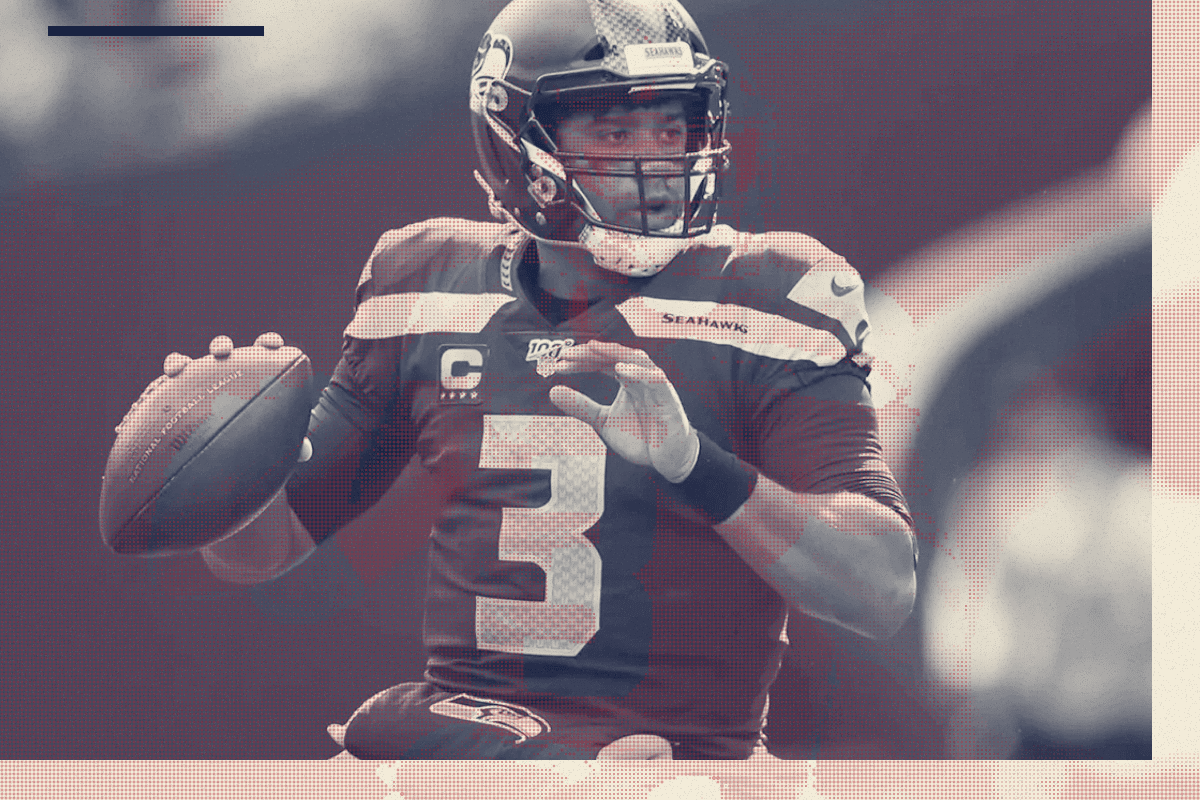
When Seattle traded Russell Wilson to Denver in March 2022, the reaction was swift and unforgiving. National media called it a surrender. Fans burned jerseys. The franchise quarterback — the man who delivered Seattle its only Super Bowl — was gone, and in return the Seahawks received a collection of draft picks and players that most analysts graded as underwhelming. ESPN's front page declared the Seahawks 'officially in tank mode.' Vegas set their over/under at 5.5 wins.
National coverage graded the return underwhelming and set Seattle's win total at 5.5 — the consensus the investigation tests.
But inside the Virginia Mason Athletic Center, the mood was different. General manager John Schneider and head coach Pete Carroll had been studying the data for months. They saw what outsiders couldn't: a roster that had become top-heavy, a salary cap that was about to implode, and a championship window that had quietly closed two seasons earlier. In 2020 and 2021, Seattle went 12-4 and 7-10 respectively — but the underlying metrics told a darker story. The defense ranked 28th and 32nd in EPA per play. Wilson's own efficiency had declined 18% over two seasons.
The trade wasn't a white flag. It was an accelerant. By moving Wilson's $49 million cap hit off the books, Seattle suddenly had the flexibility to rebuild every position group simultaneously — something almost unheard of in modern football. They received two first-round picks, two second-round picks, Noah Fant, Drew Lock, and Shelby Harris. Most analysts graded it as a B-minus for Seattle at the time. It would prove to be one of the most lopsided trades in NFL history.
The Seattle trade fundamentally challenged the NFL's most deeply held belief — that you cannot win without a franchise quarterback on an expensive contract. By demonstrating that strategic asset management could accelerate a rebuild faster than clinging to a declining star, the Seahawks created a blueprint that has since influenced decisions by the Bears, Panthers, and Texans. Understanding this trade is understanding the modern NFL's economic engine.
Three years later, the results speak for themselves. The draft picks acquired in the Wilson trade yielded two Pro Bowl starters: cornerback Devon Witherspoon (No. 5 overall, 2023) and wide receiver Jaxon Smith-Njigba (No. 20 overall, 2023). The cap space funded a defensive rebuild that transformed Seattle from the league's 28th-ranked defense to a top-10 unit in just two seasons. The defense went from allowing 26.8 points per game in 2021 to 19.4 in 2024.
Seattle turned a declining 33-year-old QB into two Pro Bowl starters on rookie deals.
- 2023 1st-round pick (No. 5)Devon Witherspoon — Pro Bowl CB
- 2023 1st-round pick (No. 20)Jaxon Smith-Njigba — 1,000-yd WR
- Noah Fant + Drew Lock + Shelby HarrisRotational depth + cap flexibility
- 2023Rd 1 · No. 5Devon WitherspoonPro Bowl cornerback
- 2023Rd 1 · No. 20Jaxon Smith-NjigbaTop-target receiver
Meanwhile, Wilson struggled in Denver. In his first season, the Broncos went 5-12 with Wilson posting a career-low 84.4 passer rating. Denver eventually released him, eating $85 million in dead cap — the largest dead money hit in NFL history. The contrast was stark: Seattle's calculated gamble paid dividends while Denver's investment became the cautionary tale of the decade.
The culture shift may have been the biggest gain of all. Under Wilson, Seattle had become a one-man show. After his departure, the locker room transformed into a genuinely collaborative environment. Players began holding each other accountable in ways that hadn't happened since the Legion of Boom era. Head coach Mike Macdonald, who replaced Carroll in 2024, inherited a roster with depth, flexibility, and hunger.
The Seahawks' Russell Wilson trade is the most important front office decision of the last five years — not because of the players involved, but because of the principle it proved. In a league where franchise quarterbacks are worshipped, Seattle demonstrated that sometimes the boldest move is knowing when to move on. The data showed what sentiment refused to accept: Wilson's decline was structural, not temporary, and every month of delay was costing the franchise its future.