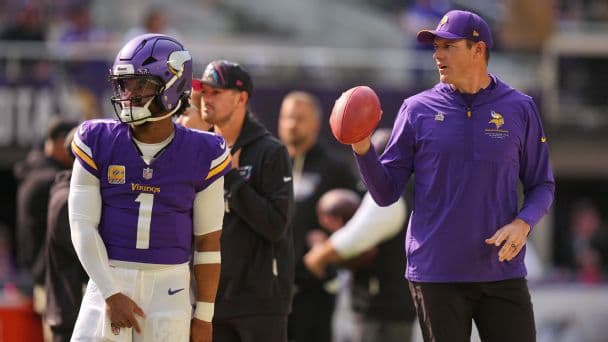
The Minnesota Vikings are 6-0. That fact alone places them in elite company: only good teams go undefeated. But Aaron Schatz's historical analysis reveals a more complicated picture. When ranked by DVOA (Defense-adjusted Value Over Average) and point differential, this Vikings team sits among the weakest undefeated starts in modern NFL history.
The evidence is stark. The 1999 Rams, the gold standard of dominant 6-0 starts, beat their first six opponents by an average of 25.7 points. The Vikings, by contrast, have won four of their six games by less than a touchdown. That's a margin that invites the randomness of football—a missed field goal, a dropped pass, a defensive breakdown—to erase a win and replace it with a loss.
Using 50 years of data going back to the 1978 move to the 16-game season, Schatz ranked the eight worst 6-0 teams ever. The Vikings haven't hit rock bottom historically. The 2012 Atlanta Falcons posted a DVOA of 18.6% (ninth-best in the league that season) with a +58 point differential. They were worse than Minnesota by multiple measures. Yet the Falcons eventually faded, as weak-margin undefeated teams often do.
But here's where history offers Minnesota hope: at least one team that started 6-0 with a DVOA and point differential worse than or comparable to the Vikings' current profile went on to win the Super Bowl. The historical precedent exists. It's rare, but it's not impossible.
The path forward requires Minnesota to tighten margins and improve underlying efficiency—the kinds of improvements that separate teams that collapse from teams that persevere. If the Vikings can't do that, their historic weakness in close games will eventually catch up to them. If they can, they'll join a tiny subset of teams that overcame slow starts to championship glory.
Elsewhere in the NFL, Buffalo's defensive collapse threatens its Super Bowl ambitions. The 5-1 Bills rank 30th in points allowed, 31st in yards allowed, and dead last in first downs allowed per game. Only Detroit allows more passing touchdowns than Buffalo, per ESPN's reporting. Coach Joe Brady acknowledged the gap between his team's current play and its ceiling, saying "our best football has to be ahead of us." For Buffalo, defense is the problem—and the deadline to fix it is now.
In Atlanta, Michael Penix Jr. answered questions about his durability and ceiling with a win over San Francisco that earned him NFC Offensive Player of the Week honors. After suffering a torn ACL—his third in his football career—Penix led the Falcons back from a 14-3 deficit to a 29-20 victory against the previously undefeated 49ers. The question mark has become an exclamation point, at least for now.
Cincinnati's Tee Higgins continues to reward the Bengals' $276 million investment in their receiver room alongside Ja'Marr Chase. Entering Sunday's game against Tennessee, Higgins ranks fourth in the NFL in receiving yards per game (95.2) and has been among the league's most productive receivers on tight window throws. At 95.2 yards per game, he's on pace for the best season of his career.
This article synthesizes reporting from ESPN, NBC Sports. Top story: "Where the 2026 Vikings rank among worst 6-0 NFL teams ever" (ESPN).