The NFL's contract market has accelerated to warp speed, but not everyone has crossed the finish line. As Week 1 approaches, ESPN's reporting reveals that multiple elite players still lack extension deals despite a summer defined by record-breaking paydays across the league.
The numbers explain the urgency and the gridlock. Since June alone, five defensive tackles have signed deals worth at least $30 million annually. Patrick Mahomes reset the quarterback market at $64 million per year, while edge rusher Will Anderson Jr. commanded $50 million annually. Five players have become positional salary benchmarks this summer, and several more set high marks in the spring. Per ESPN, the avalanche reflects a fundamental economic shift: the NFL's salary cap has surged 44.7% over the past four years, from $208.2 million in 2022 to $301.2 million now.
That growth towers over the prior four-year period. Between 2018 and 2022, the cap increased just 17.4%—from $177.2 million to $208.2 million—a stretch the pandemic partly stalled. Nothing is slowing the current trajectory, per ESPN's reporting, but the acceleration has created a paradox: teams are wealthier, yet grumbling privately about the strain of building competitive rosters around star players who consume outsized cap percentages.
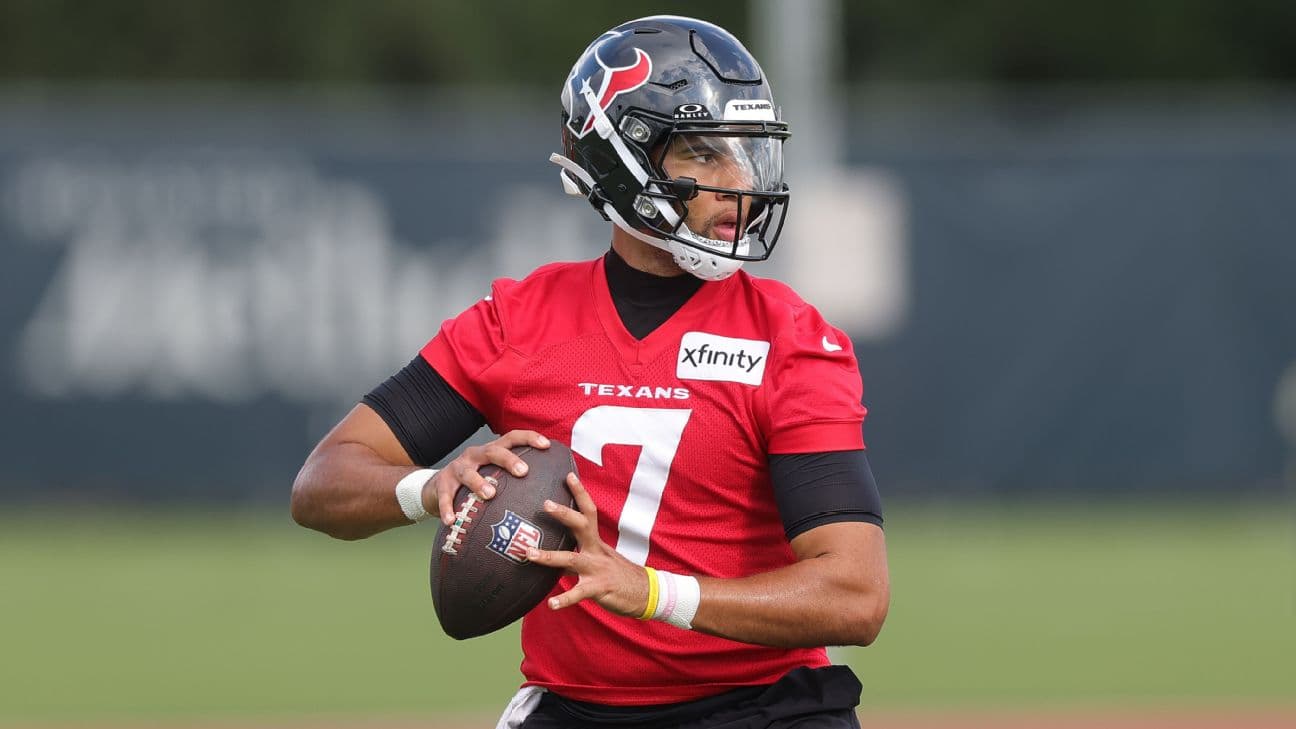
ESPN's reporting indicates that the holdouts are strategic, not accidental. The network made calls around the league and found that many key contract extension candidates—including quarterback C.J. Stroud and cornerbacks like Christian Gonzalez and Joey Porter Jr.—remain in talks. Some will reach deals before kickoff. Others are waiting out the offseason.
The waiting game reflects the leverage economics at play. Players and agents know the cap will grow further; signing now locks in a number that could feel outdated by March. Teams, conversely, face cap pressure in real time. Some will capitulate before Week 1. Others will play chicken.
The spread of unsigned elite talent across positions underscores how the market's velocity has decoupled from the calendar. In previous years, training camp deadlines forced resolution. This year, per ESPN, the deadline is more suggestion than law, and neither side appears willing to blink without cause.
What remains clear: the $301.2 million salary cap is now the floor, not the ceiling, and every week it stays unsigned, a player's negotiating position either hardens or softens depending on injury risk, team need, and the next market-setter. The Patriots' waiver-wire activity and the Rams' aggressive offseason moves—adding Myles Garrett and bringing Aaron Donald out of retirement—show that teams are still reshaping rosters even as flagship players haggle. Somewhere in that gap between cap growth and deadline pressure, the 2026 offseason's defining deals will finally get done.
This article synthesizes reporting from ESPN, Yahoo Sports, The Guardian. Top story: "11 NFL players to watch next offseason -- if they don't sign extensions" (ESPN).