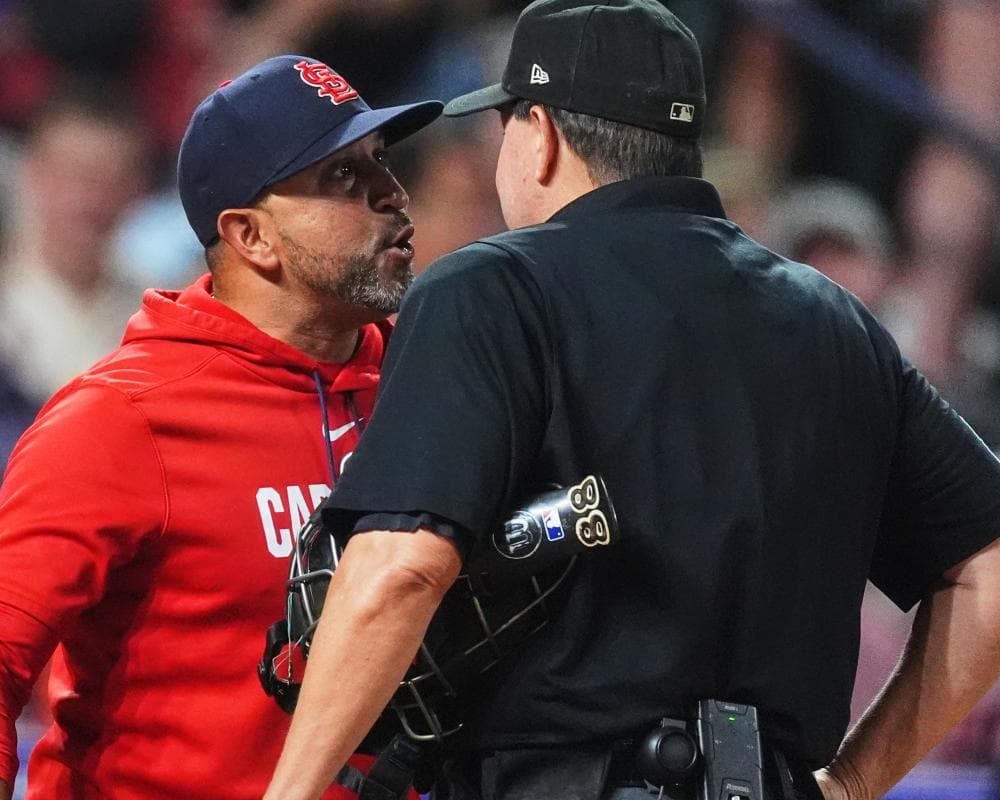
Baseball has a recurring problem that isn't about wins or losses, but about who gets to decide what joy looks like on a diamond. Per The Guardian's reporting, Black and Latino players who celebrate home runs, tilt their caps at angles, or show up with unbridled emotion continue to collide with an old guard of gatekeepers committed to a particular, colorless version of how the game should be played.
The tension isn't abstract. It plays out in real time—in how a player is received for the same gesture another player makes without comment, in the way certain expressions get coded as 'showboating' while others get called 'passion.' The Guardian frames it sharply: 'For baseball's Black and Latino players, it's always 1926 somewhere,' suggesting that despite nearly a century of integration, the sport hasn't shed its adherence to a cultural aesthetic rooted in an era that excluded them entirely.
That collision between joy and gatekeeping isn't confined to any one moment or player. It's structural, baked into how authority in baseball—from front offices to broadcast booths—has historically policed the language of celebration. The sport's old guard, per The Guardian's framing, remains devoted to what amounts to a suppression of personality, a commitment to 'Dust Bowl grimness' that treats restraint as virtue and exuberance as transgression.
What makes this urgent now is that the players embodying that joy aren't fringe figures—they're central to the sport's present and future. Yet the establishment keeps reaching for the same tired arguments: respect the game, know your role, act like you've been there before. What gets lost in that framing is that the game belongs to the players on the field, not to the people who want them quieter.
As of today, baseball continues its regular season grind: the Diamondbacks (76-68, second in the NL West) host the Royals (64-80, fifth in the AL Central); the Orioles (69-75, fifth in the AL East) face the Guardians (73-71, second in the AL Central); the Marlins (72-72, third in the NL East) take on the Mets (65-78, fifth in the NL East); and the Blue Jays (72-72, fourth in the AL East) play the Athletics (57-87, fourth in the AL West). The games continue—but so does the conversation about who gets to play them, and how.
This article synthesizes reporting from The Guardian, ESPN. Top story: "For baseball’s Black and Latino players, it’s always 1926 somewhere" (The Guardian).