The College Football Playoff picture is starting to crystallize. After Week 4, oddsmakers have recalibrated their projections for which teams will make the field, per ESPN's reporting on the CFP odds boards. The early-season landscape suggests a narrowing field of contenders as teams separate from the middle of the pack.
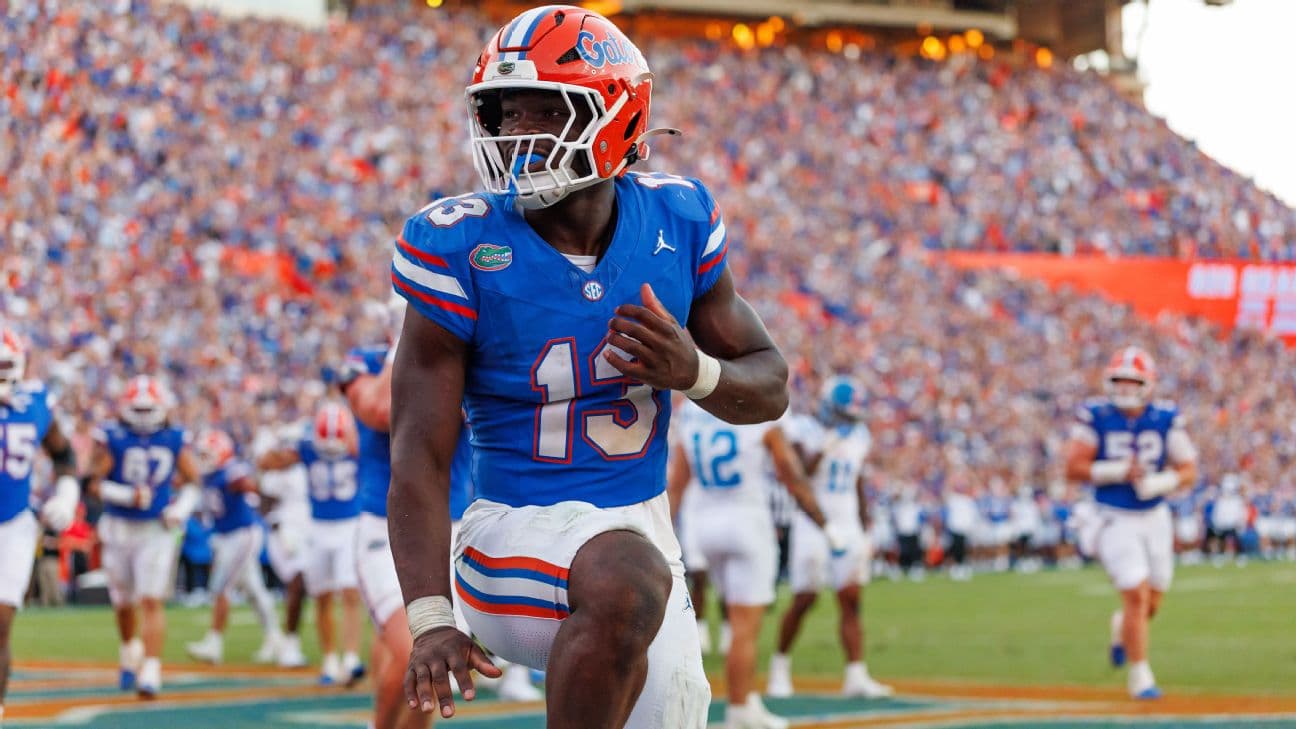
Florida quarterback Graham Baugh has become central to discussions about both the Heisman Trophy race and the Gators' CFP viability, per ESPN's reporting on odds after Week 4. Where Baugh and Florida stack up on the betting boards tells the story of how dramatically early performance reshapes expectations in college football's longest season.
The movement isn't isolated to on-field play. On Monday, the U.S. Senate voted 77-22 to pass the Protect College Sports Act, a federal bill designed to reshape the industry's structure, per ESPN's reporting. Senator Ted Cruz called the measure necessary to put "an end to the chaos plaguing college athletics." The bill's passage represents a significant step toward becoming law and signals Congress sees college sports governance as broken enough to warrant intervention at the federal level.
The specifics of what the Protect College Sports Act would accomplish remain under scrutiny. ESPN's reporting on the bill has begun separating truth from myth as the legislative framework moves closer to implementation. The act's provisions will fundamentally alter how college athletics operate, though the full scope of its impact depends on House passage and presidential signature.
On the field, consequences for violations continued to pile up. The SEC and South Carolina jointly suspended Gamecocks edge rusher Dylan Stewart for one game, per ESPN's reporting, for "egregious contact" during Saturday's matchup against Alabama. The joint decision by the conference and school underscores how physical play in high-stakes games draws immediate institutional scrutiny.
These three threads—Baugh's individual trajectory and Florida's CFP positioning, legislative overhaul at the Senate level, and disciplinary action for on-field conduct—define where college football sits after four weeks of play. The odds markets are responding to performance on the field. Congress is responding to what it sees as systemic disorder. And the sport's enforcement mechanisms are responding to how the game is being played. The week ahead will test whether these forces stabilize or further complicate the season's narrative.
This article synthesizes reporting from ESPN. Top story: "Looking at the Heisman and CFP odds: Where do Baugh and Florida stack up?" (ESPN).