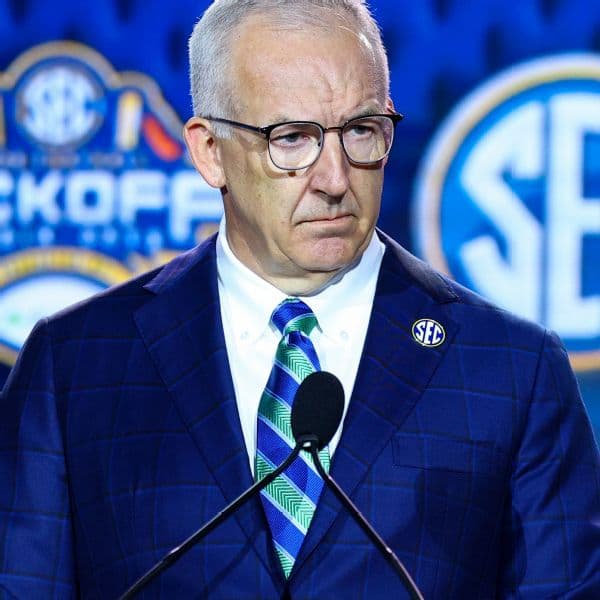
The SEC faces a legal standoff. A Louisiana judge has ordered the league to stop punishing schools for signing players who've returned from professional contracts, per ESPN's reporting. But the SEC, in a statement Sunday, made clear the fight isn't over: the league will comply with the order while simultaneously contesting it in court.
The tension sits at the intersection of NCAA rules and player rights. Commissioner Greg Sankey had been enforcing eligibility restrictions that penalized programs for rostering players with prior professional experience. The court order strips away that enforcement power—at least temporarily—but the SEC signaled it intends to challenge the judge's decision rather than accept the ruling as final.
What remains unclear from available reporting is the scope of the legal challenge ahead or the timeline for the SEC's next move. The league's willingness to both comply and contest suggests a strategy of following the immediate order while building a case for appeal, though ESPN's coverage does not detail the specific legal arguments the SEC plans to mount.
The ruling could reshape roster construction across the conference if it holds. Players with prior professional experience would face no SEC-imposed penalty for returning to college, potentially opening new pathways for athletes balancing multiple career opportunities. But the SEC's stated intention to defend its authority indicates the conference views this as a fundamental question about its regulatory power—one worth litigating even as it obeys the current injunction.
The outcome will likely ripple beyond the SEC. Other Power Four conferences may face similar legal challenges to their eligibility rules, making the SEC's court battle a potential test case for how much authority conferences retain over roster composition in an era of expanded player mobility.
This article synthesizes reporting from ESPN. Top story: "Sankey, SEC 'prepared to contest' judge's order in Louisiana" (ESPN).